Complete Guide to Commercial Truck Insurance for New Carriers in the USA (2026)
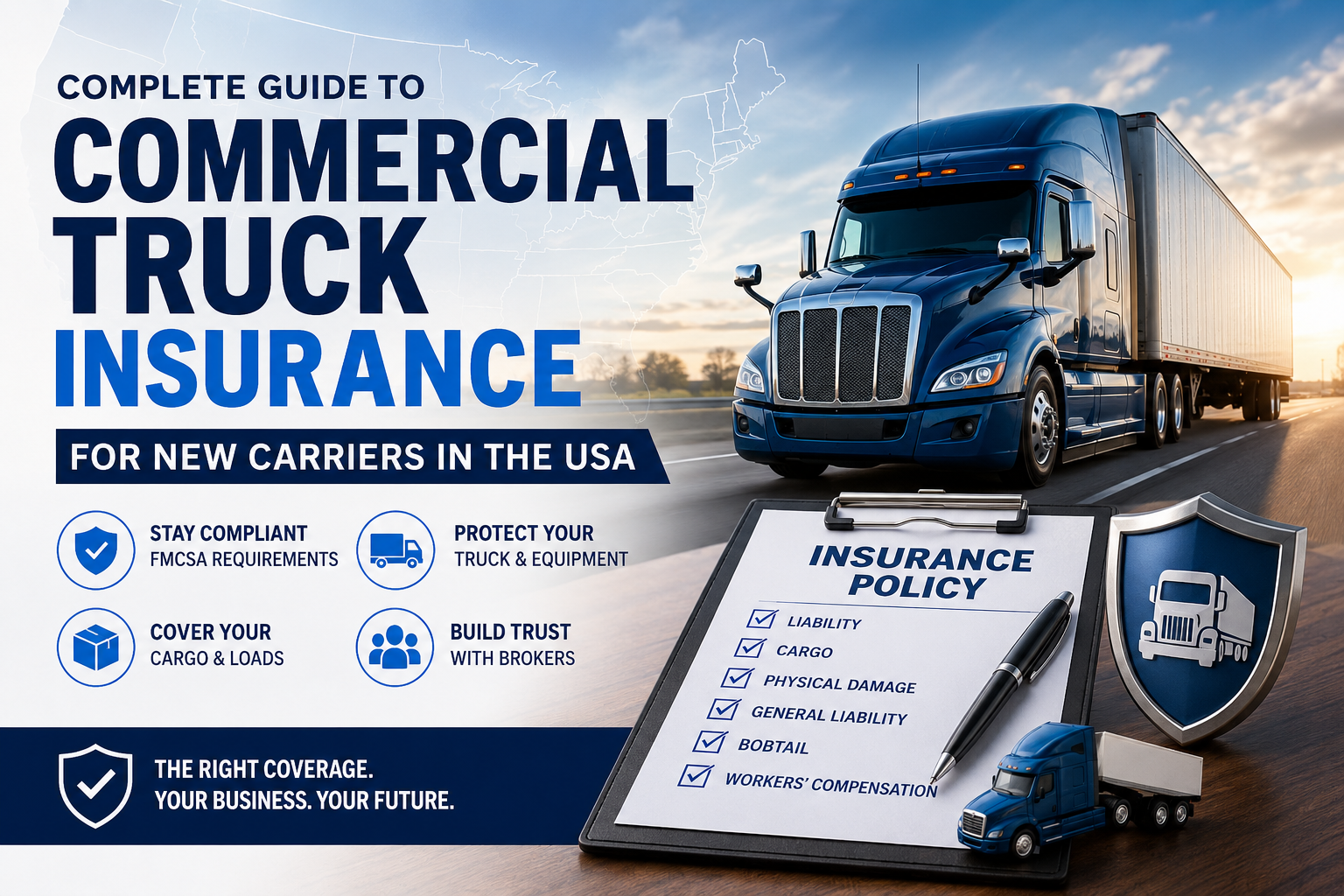
Starting a trucking company is exciting, but choosing the right insurance can be confusing. Whether you’re an owner-operator or launching a new trucking business, having the proper coverage is essential—not only to stay compliant with FMCSA regulations but also to protect your business and qualify with brokers.
In this guide, we’ll explain the different types of trucking insurance, recommended coverage amounts, and how to choose the best insurance provider for your operation.
Why Commercial Truck Insurance Matters
Without proper insurance, you cannot legally operate under your own authority, book freight with most brokers, or protect yourself from costly accidents.
The right insurance helps you:
- Stay FMCSA compliant
- Qualify with brokers and shippers
- Protect your truck and trailer
- Cover cargo claims
- Reduce financial risk
- Build trust with customers
Types of Trucking Insurance
1. Primary Liability Insurance (Required)
This is the most important insurance required by the FMCSA.
It covers injuries or property damage caused to others if your truck is involved in an accident.
Typical Coverage
- $750,000 (minimum federal requirement for many carriers)
- $1,000,000 (preferred by most freight brokers)
Many brokers refuse to work with carriers carrying only $750,000.
2. Cargo Insurance
Cargo insurance protects the freight you haul.
If the cargo is damaged, stolen, or destroyed during transportation, this policy helps cover the loss.
Recommended Coverage
- $100,000 (industry standard)
- Higher limits may be required for expensive freight.
3. Physical Damage Insurance
This covers your truck and trailer.
It protects against:
- Accidents
- Theft
- Fire
- Vandalism
- Weather damage
If you financed your truck, your lender will usually require this coverage.
4. General Liability Insurance
General liability covers accidents that occur away from the truck.
Examples include:
- Someone slipping in your office
- Property damage during loading
- Customer injury at your business
Many warehouses require this policy.
5. Bobtail Insurance
Bobtail insurance covers your truck when driving without a trailer.
Ideal for:
- Returning home
- Driving after deliveries
- Personal movement between loads
6. Non-Trucking Liability
Different from bobtail insurance.
It covers personal use of your truck when you are not working.
Example:
Driving your truck to a restaurant or grocery store.
7. Trailer Interchange Insurance
If you haul trailers owned by someone else, this coverage protects that trailer while it’s in your possession.
8. Workers’ Compensation
Required if you employ drivers in many states.
It covers:
- Medical expenses
- Lost wages
- Workplace injuries
Insurance Requirements for New Authorities
If you’re a new carrier operating under your own MC authority, most brokers expect:
| Coverage | Recommended Amount |
|---|---|
| Primary Liability | $1,000,000 |
| Cargo | $100,000 |
| Physical Damage | Truck Value |
| General Liability | $1,000,000 |
| Workers Compensation | If Required |
Insurance Costs
Insurance premiums vary depending on:
- Driver experience
- CDL history
- Business location
- Equipment type
- Cargo hauled
- Credit history
- Years in business
Estimated Annual Premiums
| Carrier Type | Estimated Cost |
|---|---|
| New Authority | $12,000–$25,000 |
| Experienced Carrier | $8,000–$18,000 |
| Owner Operator | $7,000–$15,000 |
These are estimates and may vary by state and insurance provider.
Documents Brokers Usually Request
When setting up with brokers, you’ll typically need:
- Certificate of Insurance (COI)
- W-9
- Operating Authority
- MC Number
- DOT Number
- Notice of Assignment (if using factoring)
Keeping these documents updated helps avoid delays when booking loads.
How to Choose the Right Insurance Company
Don’t choose based on price alone.
Look for:
✅ Strong financial rating
✅ Fast claims process
✅ Experience with trucking
✅ Good customer service
✅ Flexible payment plans
✅ Broker acceptance
Questions to Ask Before Buying
Before signing a policy, ask:
- What deductibles apply?
- Are rental trucks covered?
- Is roadside assistance included?
- Is downtime covered?
- Can I add drivers later?
- Are there hidden fees?
- Are trailer swaps covered?
Common Mistakes New Carriers Make
Many new carriers:
- Buy the cheapest policy
- Choose insufficient cargo limits
- Forget physical damage coverage
- Don’t verify broker requirements
- Delay sending updated COIs
- Ignore policy exclusions
These mistakes can prevent you from booking loads or leave you exposed to expensive claims.
Tips to Lower Insurance Costs
You may qualify for lower premiums by:
- Maintaining a clean driving record
- Hiring experienced drivers
- Installing dash cameras
- Using electronic logging devices (ELDs)
- Paying annually instead of monthly
- Increasing deductibles (if appropriate)
- Building a claims-free history
Final Thoughts
Commercial truck insurance is one of the most important investments for any trucking business. Choosing the right coverage protects your company, helps you qualify with more brokers, and gives you confidence on the road.
Whether you’re applying for your first authority or expanding your fleet, understanding your insurance options can save you thousands of dollars in the long run.
Frequently Asked Questions (FAQ)
How much liability insurance do I need?
Most brokers prefer $1 million in primary liability coverage.
Is cargo insurance required?
While not always required by law, most brokers expect at least $100,000 in cargo coverage.
Can I operate without physical damage insurance?
Yes, if you own your truck outright. However, lenders usually require it for financed vehicles.
What is a COI?
A Certificate of Insurance (COI) is proof of your insurance coverage. Brokers typically request it during carrier onboarding.
Does insurance cost less after my first year?
In many cases, yes. Carriers with a clean claims history and more operating experience often qualify for lower premiums.
Need Help Finding Loads?
At NitroFreightLogistics LLC, we help owner-operators and small carriers focus on driving while we handle load searching, rate negotiation, paperwork, and broker communication. Contact us to learn how our dispatch services can help keep your trucks moving.